

Cultures
Choosing the right cultures for your application is the basis of your success. Here you will find the different ranges of cultures available.
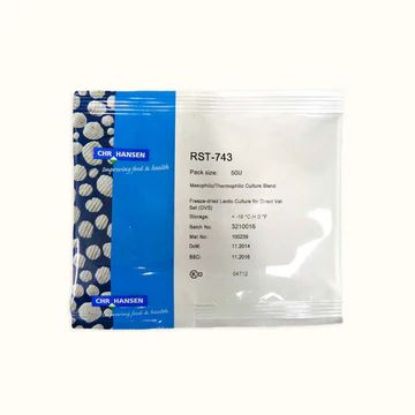
RST-743 Freeze-dried 50 u
A defined strain homofermentative culture blend with improved resistance to bacteriophages.
The culture does not produce CO2.
The culture is primarily applied in the production of semi-hard, hard and very hard pressed cheeses with a closed texture and a min cooking temperature at 35°C (95°F).
Examples of applications are Cheddar, Cheshire, Colby, Monterey Jack, Munster, Fontal, Raclette & Saint Paulin.
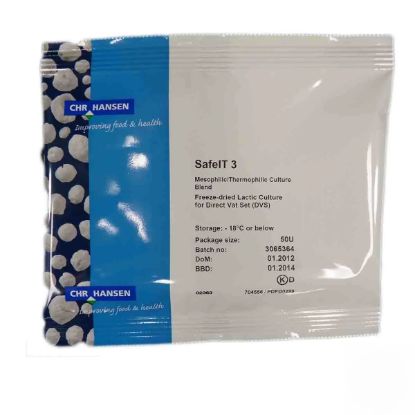
WhiteDaily 82 Freeze-dried 50 u
Blend of mesophilic homofermentative and thermophilic lactic acid cultures This culture contains specially selected strains chosen for their phage resistance and ability to produce lactic acid quickly.
This culture does not produce CO2.
The culture is used in the production of White Cheeses, Feta or UF products.
Depending on production process, the texture will be firm with some holes or closed.
$15.83
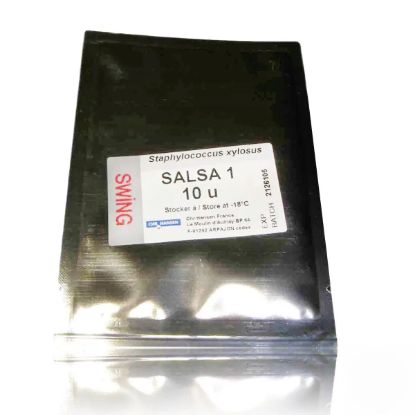
SALSA 1 Swing Freeze-dried 10 u
A selected single strain ripening culture with origins in traditional cheese making.
SALSA is used to flavor cheeses where sulphur/traditional raw milk cheese aroma is desired.
The culture may also be used to affect texture or for coloring the surface of smeared cheeses.
La culture peut être utilisée dans la fabrication de tous types de fromages à croûtes lavées (morgées) ou mixtes.
elle contribue à assouplir la pâte et à réduire le temps d'affinage.

SALSA 2 Swing Freeze-dried 40 u
A selected single strain ripening culture with origins in traditional cheese making.
SALSA is used to flavor cheeses where sulphur/traditional raw milk cheese aroma is desired.
The culture may also be used to affect texture or for coloring thesurface of smeared cheeses.
The culture may be applied in the production of all smeared and mixed rind cheeses.
The cultures contributes to soften cheese body and may reduce ripening time.
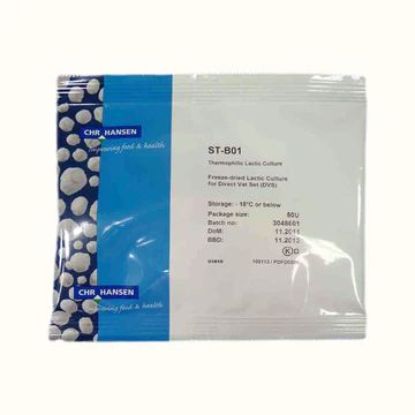
ST-B01 Freeze-dried 50 u
Defined thermophilic culture containing strains selected for their moderate lactic acid production and low post acidification.
The culture is primarily applied in the production of soft cheeses with low post acidification, e.g. stabilized cheeses and modern Camembert and Emmenthal types.
The culture can be applied alone (for stabilized soft cheese) or in combination with other lactic acid cultures, e.g. Lactobacillus helveticus (for Emmenthal).
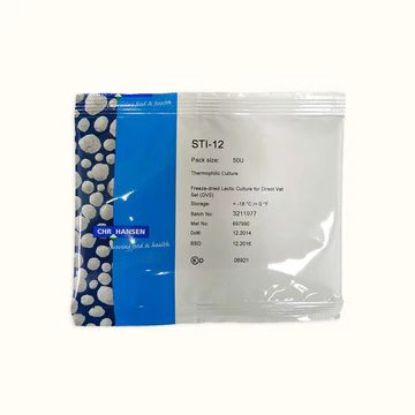
STI-12 Freeze-dried 50 u
Thermophilic lactic acid culture.
The culture is primarily applied in Pasta Filata cheese types e.
g Mozzarella and Pizza cheese types.
The culture can be applied alone or in combination with other lactic acid cultures, e.g. Lactobacillus delbrueckii subsp.bulgaricus and Lactobacillus helveticus.
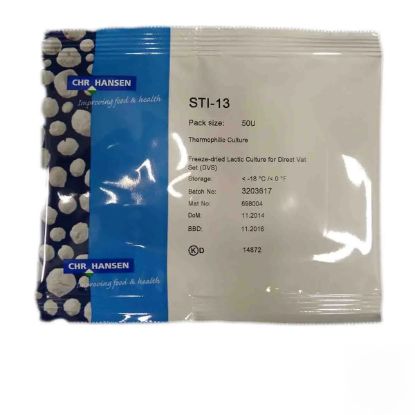
STI-13 Freeze-dried 50 u
Thermophilic lactic acid culture.
The culture is primarily applied in Pasta Filata cheese types e.
g Mozzarella and Pizza cheese types.
The culture can be applied alone or in combination with other lactic acid cultures, e.g. Lactobacillus delbrueckii subsp.bulgaricus and Lactobacillus helveticus.
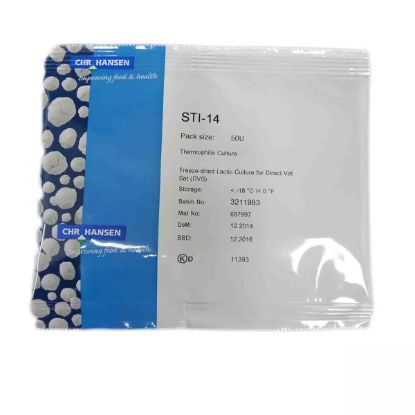
STI-14 Freeze-dried 50 u
Thermophilic lactic acid culture.
The culture is primarily applied in Pasta Filata cheese types e.
g Mozzarella and Pizza cheese types.
The culture can be applied alone or in combination with other lactic acid cultures, e.g. Lactobacillus delbrueckii subsp.bulgaricus and Lactobacillus helveticus.

TCC-20 Freeze-dried 50 u
Defined thermophilic lactic acid culture.
The culture is primarily applied in the production of Pasta Filata cheese types, e.g. Mozzarella and Pizza cheese types.
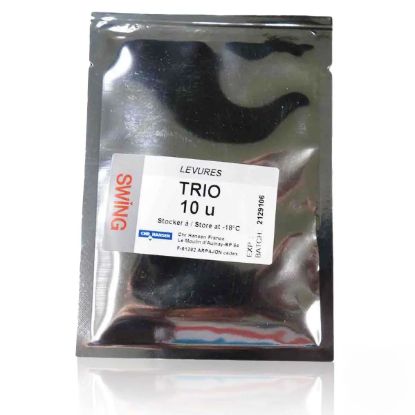
LAF-TRIO Swing Freeze-dried 10 u
Selected yeast strains with origin in traditional French cheese making.
SWING® LAF TRIO is a blend of defined yeast strains.
They have been especially selected for their ablity to prevents the growth of contaminant at the surface of the cheese.
The synergetic effect from the strains inhibits contaminant, e.g. blue molds and mucor.
Yeast cultures may be used in lactic curd, soft cheeses with washed surface and Continental cheese with natural rind.
Yeast cultures may be used in lactic curd, soft cheeses with washed surface and Continental cheese with natural rind.
The culture works in different ways:
- by generation a protective film on the cheese surface
- by allowing the consumption of residual sugars
- by accelerating the curd neutralisation.
The culture works in different ways:
- by generation a protective film on the cheese surface
- by allowing the consumption of residual sugars
- by accelerating the curd neutralisation.

PCA1 Swing Freeze-dried 10 u
Selected mold strains with origin in traditional cheese making.
SWING® PC culture is an essential ingredient in the ripening process of white mold cheeses for its role in coloring the surface of the cheese, and contributing to the flavor and texture, as well as protection against contaminants.
The strains may be used on soft cheese with lactic features, camembert/brie types, Tomme, UF soft cheeses, stabilized soft cheeses and soft cheese with rennet features.

PCA3 Swing Freeze-dried 10 u
Selected mold strains with origin in traditional cheese making.
SWING® PC culture is an essential ingredient in the ripening process of white mold cheeses for its role in coloring the surface of the cheese, and contributing to the flavor and texture, as well as protection against contaminants.
The strains may be used on soft cheese with lactic features, camembert/brie types, Tomme, UF soft cheeses, stabilized soft cheeses and soft cheese with rennet features.

TT033 Swing Freeze-dried 10 u
Selected mold strains with origin in traditional cheese making.
SWING® PC culture is an essential ingredient in the ripening process of white mold cheeses for its role in coloring the surface of the cheese, and contributing to the flavor and texture, as well as protection against contaminants.
The strains may be used on soft cheese with lactic features, camembert/brie types, Tomme, UF soft cheeses, stabilized soft cheeses and soft cheese with rennet features.
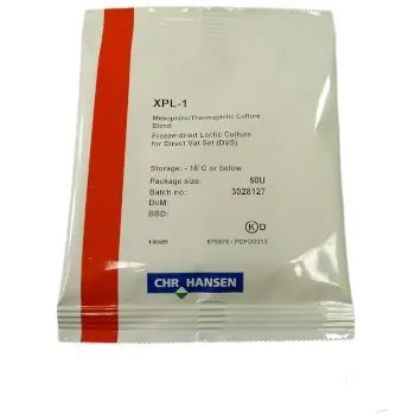
XPL-1 Freeze-dried 50 u
Blend of mesophilic aromatic eXact® culture, type LD and thermophilic culture.
The eXact-Plus culture produces texture, flavor and CO2.
Manufacturing of the following fermented milk products:
- Kefir type products
- Crème fraiche/sour cream Fermented milks produced with XPL cultures will have extra high texture, high flavor and medium CO2.
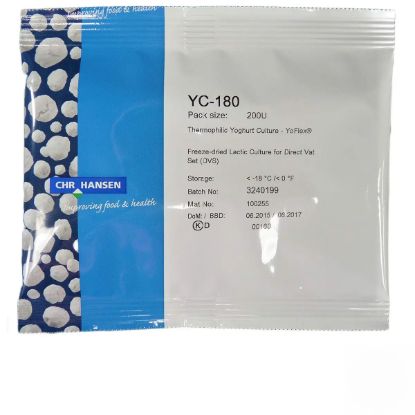
YC-180 Freeze-dried 200 u
Thermophilic YoFlex® culture.
The culture will produce yoghurt with medium flavor, high viscosity and medium postacidification.
Suitable for cup set, stirred and drinking yoghurt.
$75.44
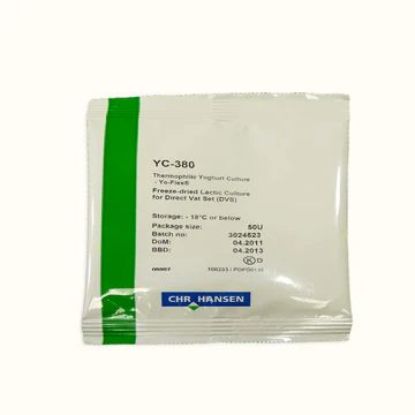
YC-380 Freeze-dried 50 u
Thermophilic YoFlex® culture.
The culture will produce yoghurt with strong flavor, medium viscosity and some post-acidification.
Suitable for cup set, stirred and drinking yoghurt.
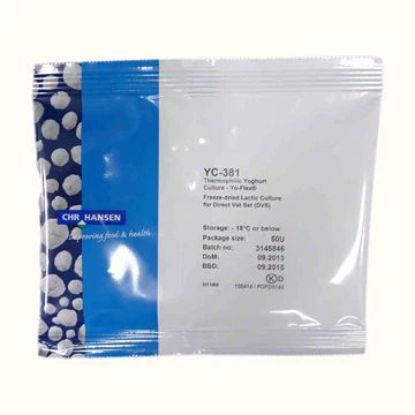
YC-381 Freeze-dried 50 u
Thermophilic YoFlex® culture.
The culture will produce yoghurt with strong flavor, high viscosity and some postacidification.
Suitable for cup set, stirred and drinking yoghurt.
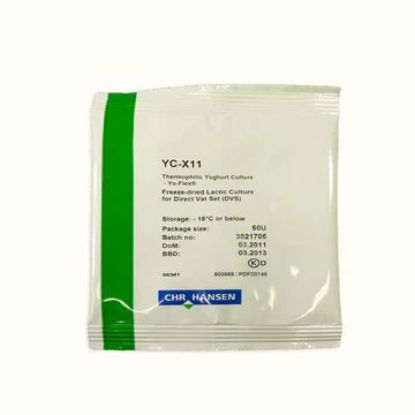
YC-X11 Freeze-dried 50 u
Thermophilic YoFlex® culture.
The culture will produce yoghurt with mild flavor, high viscosity and low post-acidification.
Suitable for cup set, stirred and drinking yoghurt.
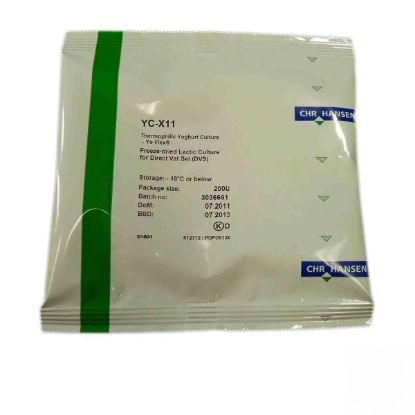
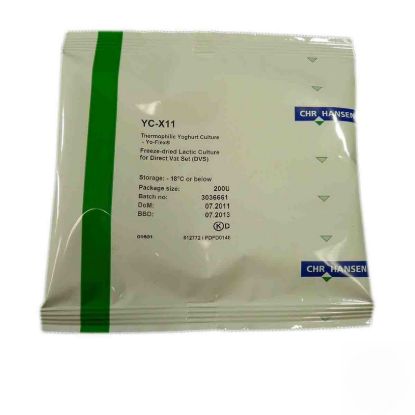
YC-X11 Freeze-dried 200 u
Thermophilic YoFlex® culture.
The culture will produce yoghurt with mild flavor, high viscosity and low post-acidification.
Suitable for cup set, stirred and drinking yoghurt.
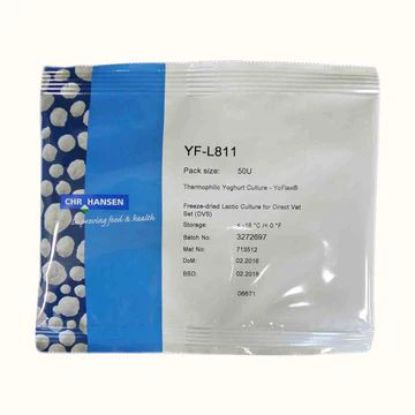
YF-L811 Freeze-dried 50 u
Thermophilic YoFlex® culture.
The culture will produce yoghurt with very mild flavor, very high viscosity and very low post-acidification.
Suitable for cup set, stirred and drinking youghurt.
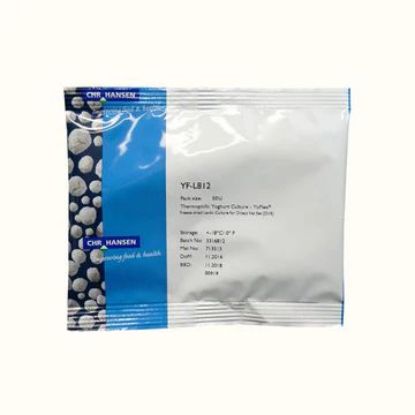
YF-L812 Freeze-dried 50 u
Thermophilic YoFlex® culture.
The culture will produce yoghurt with very mild flavor, extra high viscosity and very low post-acidification.
Suitable for cup set, stirred and drinking yoghurt.
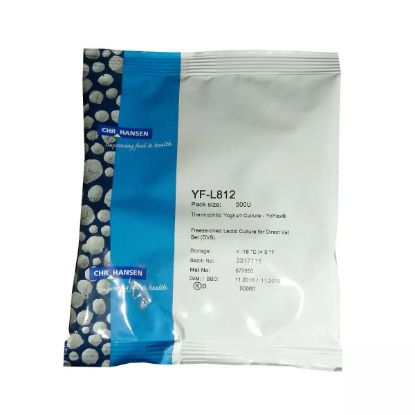
YF-L812 Freeze-dried 500 u
Thermophilic YoFlex® culture.
The culture will produce yoghurt with very mild flavor, extra high viscosity and very low post-acidification.
Suitable for cup set, stirred and drinking yoghurt.
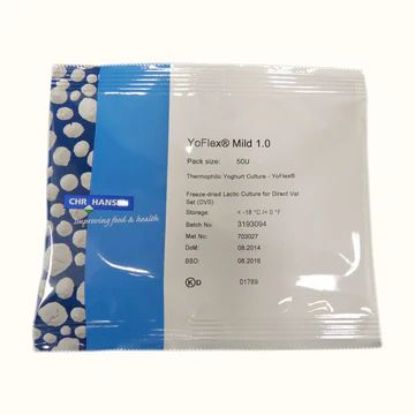
YoFlex Mild 1.0 Freeze-dried 50 u
Mesophilic aromatic culture, type LD.
The culture produces flavor and CO2.
This range provides cultures with fast acidification properties at a low inoculation rate.
The culture is primarily used in the manufacturing of Continental semi-hard cheese varieties with eyes, e.g. Gouda, Edam, Leerdam and Havarti.
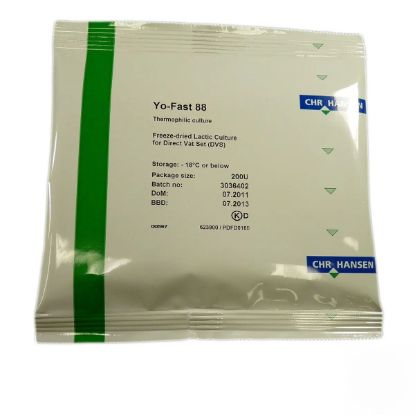
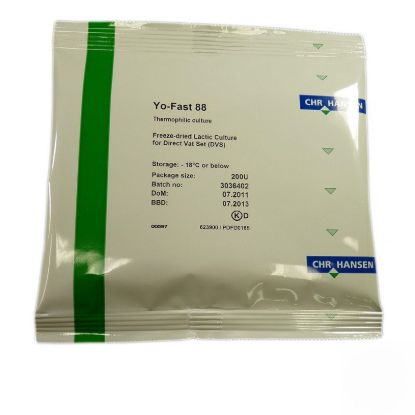
YO-FAST 88 Freeze-dried 200 u
The Yo-Fast® series contains blended strains in a concentrated frozen pellet form to produce yoghurt with unique flavor and body characteristics.
The culture will produce a fermented milk with very high body, mild flavor and minimal/medium post-acidification.
Suitable for stirred, drinking and frozen yoghurt.
$71.12