

Products
From cultures to packaging, including equipment, here is our range of products.
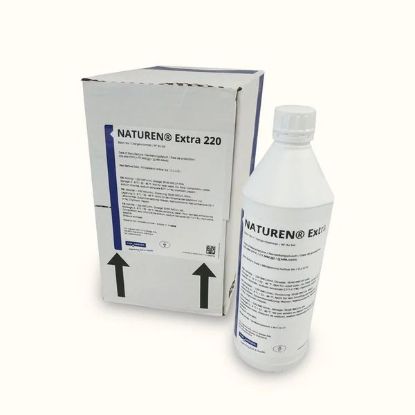
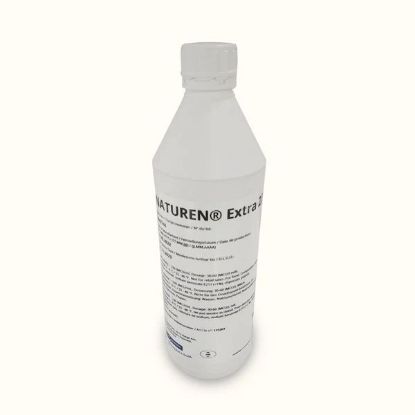
Natural rennet NATUREN® Extra 220 1 L
NATUREN® Extra 220 is a standardized rennet manufactured from extracts of the fourth stomach of calves.
The product contains a milk-clotting enzyme which is highly specific for kappa-casein, resulting in very good curd formation.
The general proteolytic activity also has a significant influence on the flavor and texture development of cheeses.
The active milk-coagulating enzymes are chymosin (EC 3.4.23.4) and bovine pepsin (EC 3.
4.
23.
1).
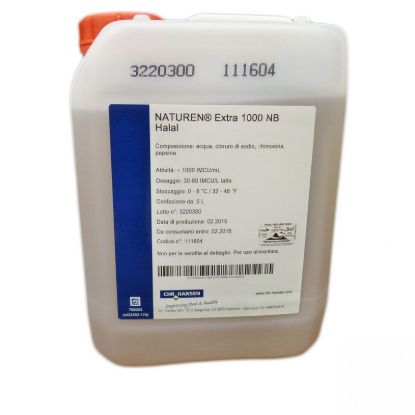
Natural rennet NATUREN® Extra 1000 NB Halal 5 L
NATUREN® Extra 1000 NB Halal is a standardized rennet manufactured from extracts of the fourth stomach of calves and/or adult bovines.
NB indicates that this product is formulated with No Benzoate added.
As benzoate helps maintain the microbial quality of liquid enzyme products, Chr.Hansen strongly advises customers to adhere to the recommended storage and transportation temperatures for NB products.
If this is not possible, a benzoate-free powder product or liquid formulated with benzoate should be used.
The product contains a milk-clotting enzyme which is highly specific for kappa-casein, resulting in very good curd formation.
The general proteolitic activity also has a significant influence on the flavor and texture development of cheeses.
The active milk-coagulating enzymes are chymosin (EC 3.4.23.4) and bovine pepsin (EC 3.
4.
23.
1).
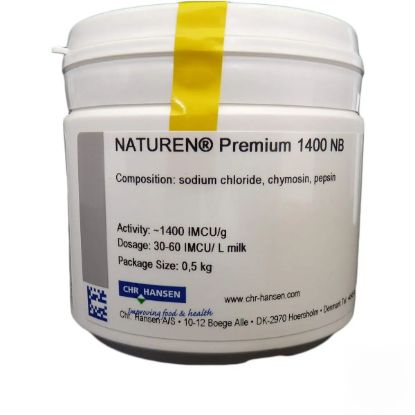
Natural rennet NATUREN® Plus 1400 NB 500 g
NATUREN® Premium 1400 NB is a standardized rennet manufactured from extracts of the fourth stomach of calves.
NB indicates that this product is formulated with No Benzoate added.
The product contains a milk-clotting enzyme which is highly specific for kappa-casein, resulting in very good curd formation.
The general proteolitic activity also has a significant influence on the flavor and texture development of cheeses.
The active milk-coagulating enzymes are chymosin (EC 3.4.23.4) and pepsin (EC 3.
4.
23.
1).
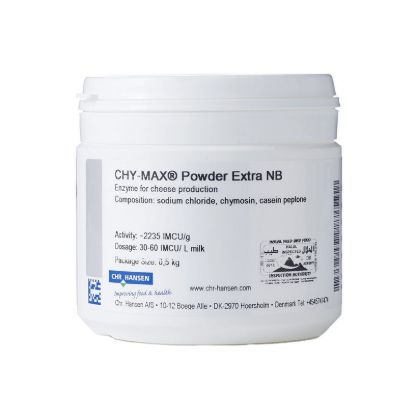
CHY-MAX® Powder Extra NB 500 g
CHY-MAX® Powder Extra NB is a pure chymosin produced by submerged fermentation on a vegetable substrate with Aspergillus niger var.
awamori kept under contained conditions and not present in the final product.
The product contains a milk-clotting enzyme which is highly specific for kappa-casein, resulting in very good curd formation.
The general proteolitic activity also has a significant influence on the flavor and texture development of cheeses.
The active milk-coagulating enzyme is chymosin (EC 3.4.23.4).
$150.77
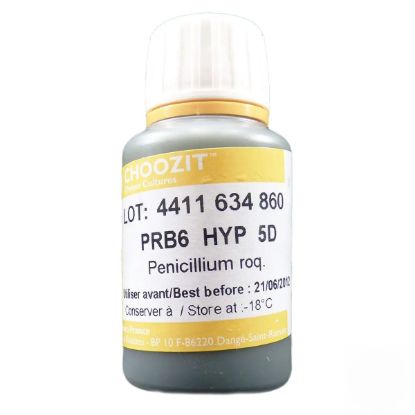
PRB 6 Liquid - Hyptonic 5 D
Blue mould in liquid suspension form for cheese production.
Direct inoculation of cheese milk.
We do not accept any liability in case of undue application.
| Quantity | Price |
|---|---|
| 1 + | $39.40 |
| 6 + | $38.43 |
| 14 + | $29.89 |
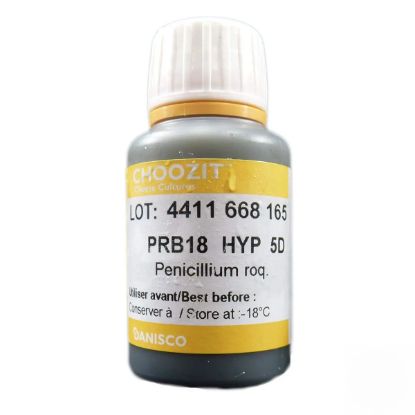
PRB 18 Liquid - Hyptonic 5 D
Blue mould in liquid suspension form for cheese production.
Direct inoculation of cheese milk.
We do not accept any liability in case of undue application.
| Quantity | Price |
|---|---|
| 1 + | $39.40 |
| 6 + | $38.43 |
| 14 + | $29.89 |
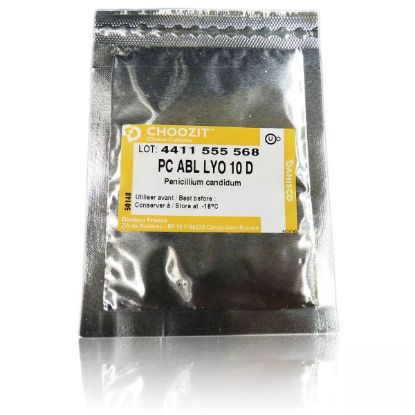
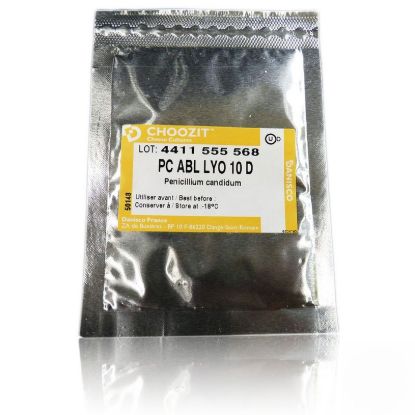
ABL Freeze-dried 10 D
Maturation/ ripening culture made up of Penicilium candidum spores.
Penicilium candidum is the ordinary name of Penicilium camemberti.
Direct inoculation of cheese milk.
Dilution for use in spray just before use.
We do not accept any liability in case of undue application.
| Quantity | Price |
|---|---|
| 1 + | $21.67 |
| 6 + | $21.00 |
| 19 + | $15.88 |
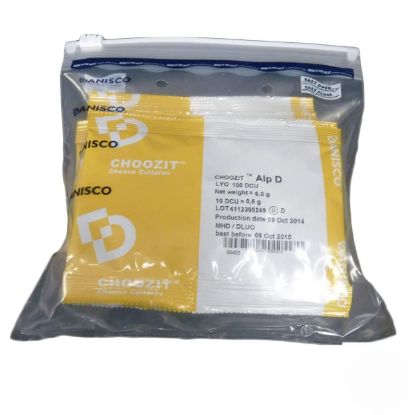
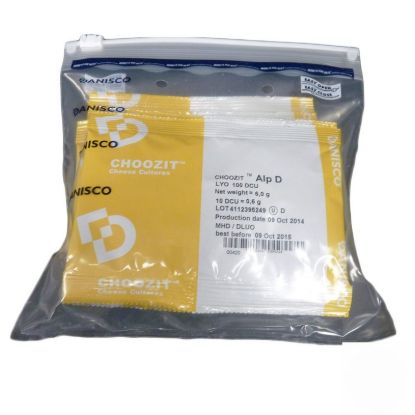
ALP D Freeze-dried 100 DCU
Concentrated, freeze-dried culture for direct inoculation of process milk.
Defined multiple-species culture.
The quantities of inoculation indicated should be considered as guidelines.
Supplement cultures may be required depending on technology, fat content and product properties desired.
We do not accept any liability in case of undue application.
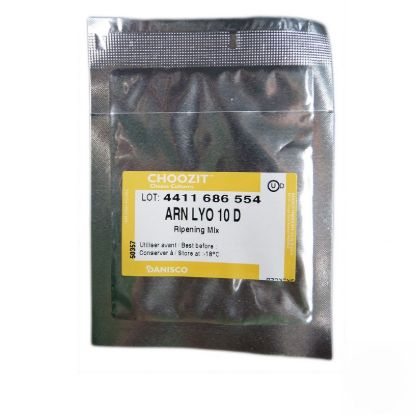
ARN Freeze-dried 10 D
Direct inoculation of cheese milk.
Dilution for use in spray just before use.
We do not accept any liability in case of undue application.
| Quantity | Price |
|---|---|
| 1 + | $33.09 |
| 19 + | $29.20 |
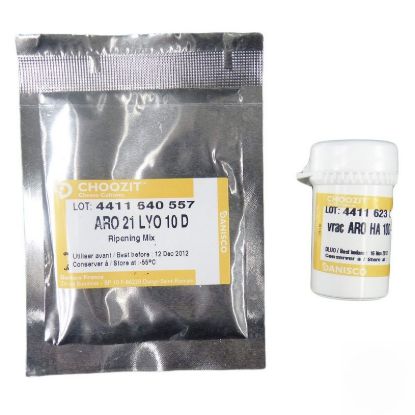
ARO 21 Freeze-dried 10 D
Blend of microorganisms for soft cheese flavour.
| Quantity | Price |
|---|---|
| 1 + | $33.20 |
| 19 + | $28.37 |
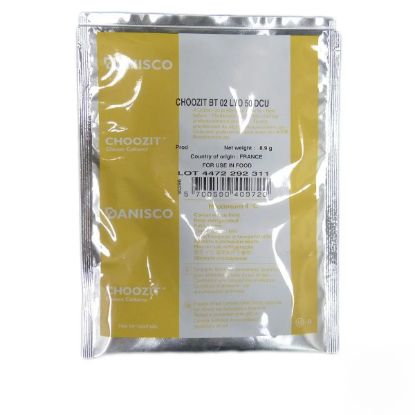
BT 02 Freeze-dried 50 DCU
Freeze-dried concentrated lactic starter for the direct vat inoculation of milk and mil bases.
Store at temperature at 4 degrés in dry atmosphere.
When stored at negative temperature, keep the sachet at room temperature for 30 to 60 minutes before opening.
If not, the performance of culture is affected.
Prolonged exposure at room temperature will reduce is in powder form.
Add directly to the manufacturing milk as soon as the agitation blades of the vat are covered with milk.
Avoid foam and air introduction in the milk.
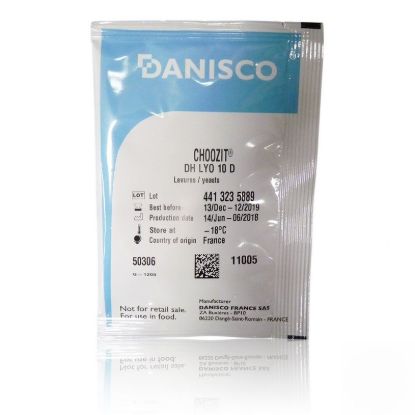
DH Freeze-dried 10 D
Yeasts for des-acidification in cheese making.
| Quantity | Price |
|---|---|
| 1 + | $33.50 |
| 19 + | $28.45 |

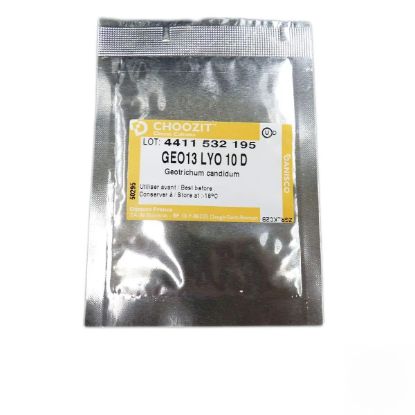
GEO 13 Freeze-dried 10 D
Ferment d'aromatisation pour la fromagerie
| Quantity | Price |
|---|---|
| 1 + | $31.75 |
| 19 + | $26.61 |
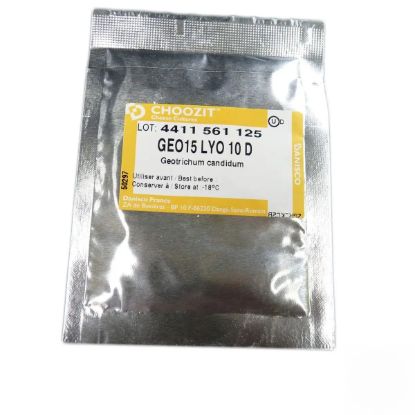
GEO 15 Freeze-dried 10 D
A key agent in the ripening of cheese, Geotrichum, implants very rapidly on the cheese surface and has a synergistic effect on the implantation on flora such as Brevibacterium linens tha require a neutral environment.
| Quantity | Price |
|---|---|
| 1 + | $31.75 |
| 19 + | $26.61 |
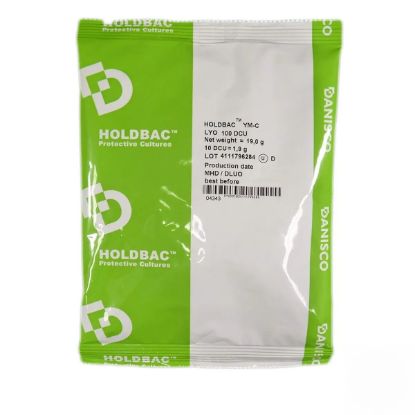
HOLDBAC YM-C Freeze-dried 100 DCU
Concentrated, freeze-dried culture for direct inoculation of process milk.
Defined multiple-species culture.
The quantities of inoculation indicated should be considered as guidelines.
Supplement cultures may be required depending on technology, fat content and product properties desired.
We do not accept any liability in case of undue application.
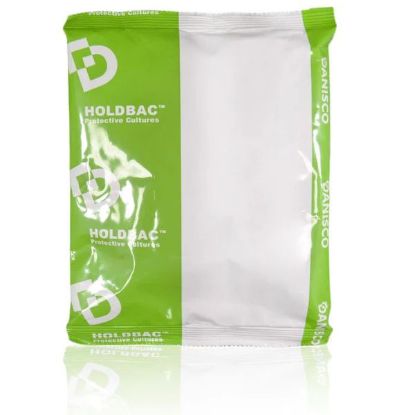
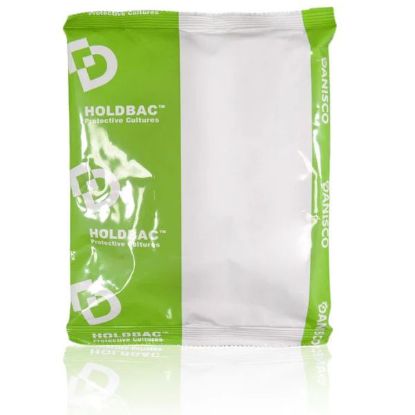
HOLDBAC YM-B Plus Freeze-dried 500 DCU
Freese dried culture for direct inoculation.
Defined multiple-species culture.
Disinfect opening area with ethanol before opening package.
Cut open and add culture to process milk under aseptic conditions.
It has to be considered that the whole content of the package is to be applied to assure constant product quality.
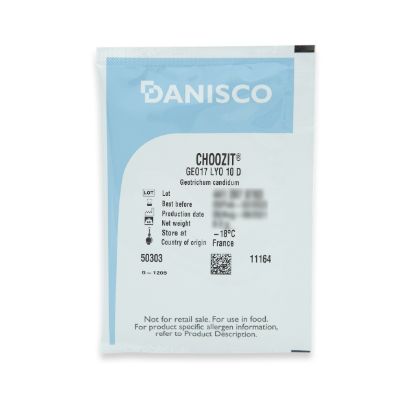
GEO 17 Freeze-dried 10 D
Maturation/ ripening culture made up of Penicilium candidum spores.
Penicilium candidum is the ordinary name of Penicilium camemberti.
Direct inoculation of cheese milk.
Dilution for use in spray just before use.
We do not accept any liability in case of undue application.
| Quantity | Price |
|---|---|
| 1 + | $31.75 |
| 19 + | $26.61 |
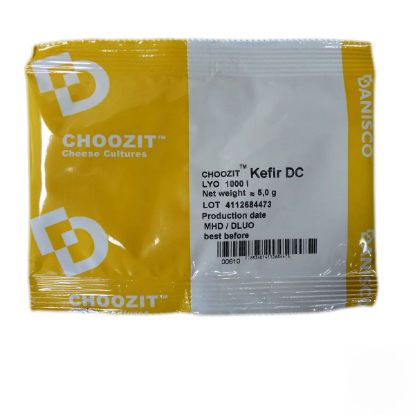
KEFIR DC for 1000 L Freeze-dried (Box of 10 pouches)
Concentrated, freeze-dried culture for direct inoculation of milk, multi species culture with kefir grains.
$49.86
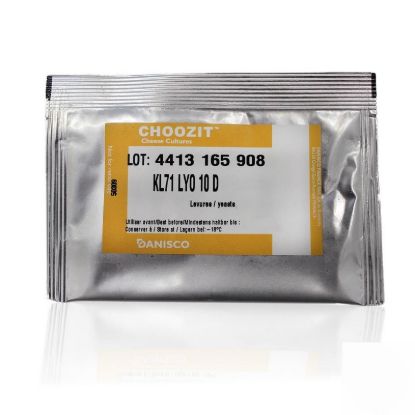
KL71 Freeze-dried 10 D
Yeast for des-acidification in cheese making and aroma developing.
| Quantity | Price |
|---|---|
| 1 + | $33.68 |
| 19 + | $28.52 |
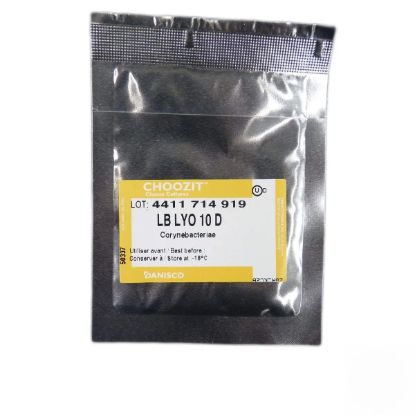
LB Freeze-dried 10 D
Aroma developing and coloring culture for cheese.
| Quantity | Price |
|---|---|
| 1 + | $29.33 |
| 6 + | $28.36 |
| 19 + | $22.75 |
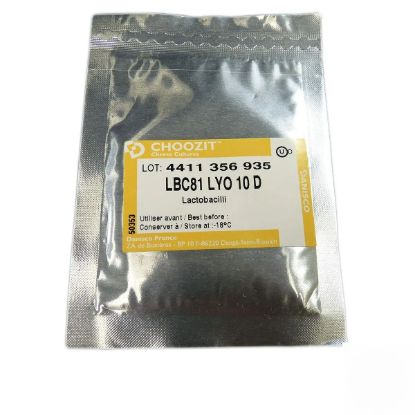
LBC 81 Freeze-dried 10 D
Aroma developing culture for cheese.
| Quantity | Price |
|---|---|
| 1 + | $75.68 |
| 15 + | $64.04 |
| 27 + | $59.46 |
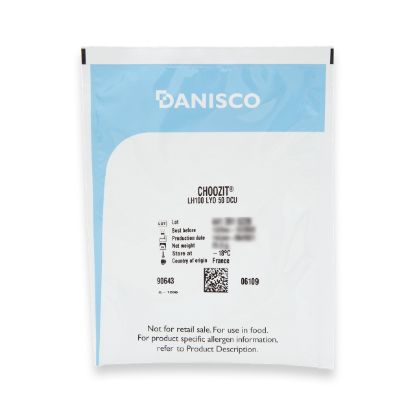
LH 100 Freeze-dried 50 DCU
Freeze-dried concentrated lactic starter for the direct vat inoculation of milk and mil bases.
Store at temperature at 4 degrés in dry atmosphere.
When stored at negative temperature, keep the sachet at room temperature for 30 to 60 minutes before opening.
If not, the performance of culture is affected.
Prolonged exposure at room temperature will reduce is in powder form.
Add directly to the manufacturing milk as soon as the agitation blades of the vat are covered with milk.
Avoid foam and air introduction in the milk.
| Quantity | Price |
|---|---|
| 1 + | $48.23 |
| 50 + | $44.90 |